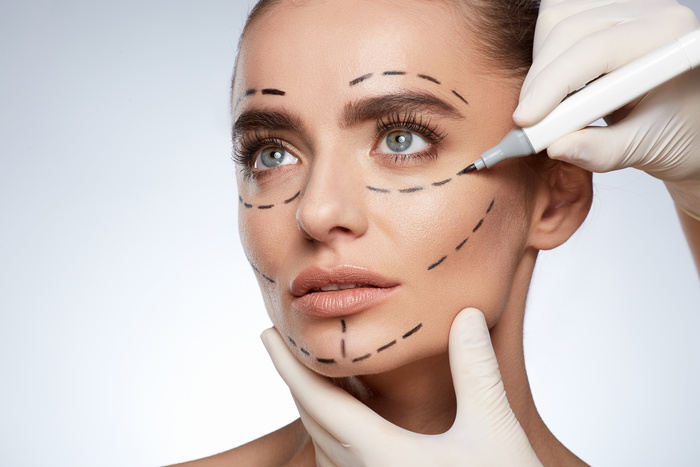
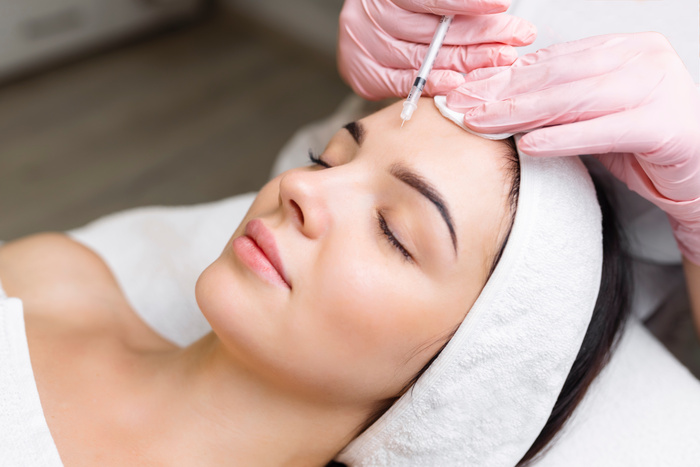
Last month, we addressed the middle stages in our three-part series on Facial Aging, the changes your face undergoes during your Thirties and Forties. In this post, our last segment of the series, we’ll wrap up with the changes your face undergoes during your Fifties and Sixties, and what we can still accomplish non-surgically through a combination of injectables – the neuromodulators (Botox, Dysport), long-term fillers (Sculptra, Radiesse), and fat transfer from your own body.
The aging process is affected most by two things, one over which you have complete control, your exposure to the sun and the environment, and the other over which you have no control, your genetics.
Regardless of how the signs of aging appear, we’ve made tremendous strides in pushing back the clock.
Celebrities like former supermodel Christie Brinkley (58), actresses Heather Locklear (50), Julia Louis-Dreyfus (51), Jane Seymour (61), Meryl Streep (62), Helen Mirren (66), and the
band Blondie’s vocalist Debbie Harry (66), remind us that women in their Fifties and Sixties are still considered “bombshells.”
It is the grace at which women enter, and then reside, in their Fifties and Sixties which add to their glow and vibrancy as much as their cosmetic or surgical enhancements.
Much of what I discussed in the last installment holds equally true in these next two decades of a women’s life:
Although losing weight has many benefits for your overall health, it can also intensify the signs of aging.Studies show that women over the age of 40 appear younger if they have a heavier face; conversely, losing just 10 pounds once you are over the age of 40 can make you look at least four years older, and that gap grows as you age.

Deepening laugh lines, nasolabial folds, and marionette lines due to the loss of fat and definition near the cheeks
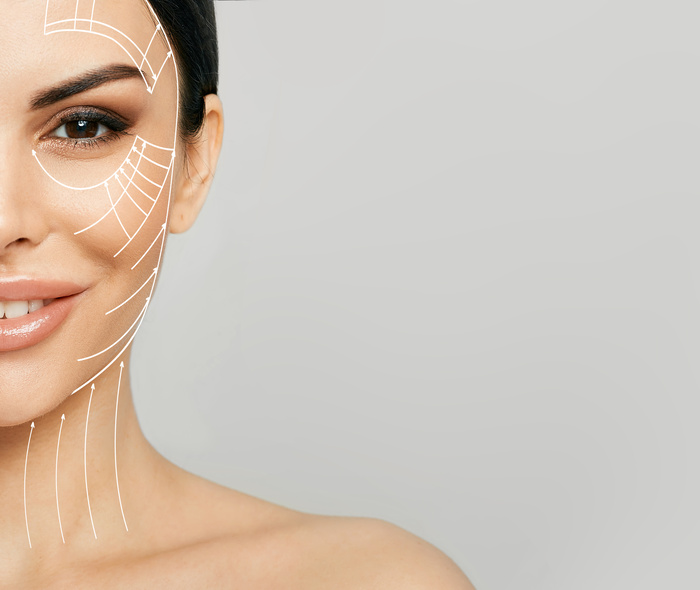
The loss of collagen and fat from the face as a woman ages, even if she does not diet and is simply due to menopause, will inevitably result in deepening laugh lines, nasolabial folds, and marionette lines due to the loss of fat and definition near the cheeks, as well as thinning lips.
With so much affected by volume loss, a combination of approaches tailored to your unique facial structure and aging effects is called for, since different approaches may be used based on the results you seek. Volume loss can be temporarily corrected with injectables (which can be used repeatedly, over time), while fat transfer offers a longer-lasting solution. Ultimately – and we’ll discuss this is great depth in our five-part surgical series beginning this fall — a facelift is the gold standard for this type of problem. As Catherine Deneuve famously said, “After 40 you can have your face or your body, but not both!”

Using fillers and neuromodulators in tandem can address crow's feet, forehead wrinkles, and soften the "angry" look many women complain about
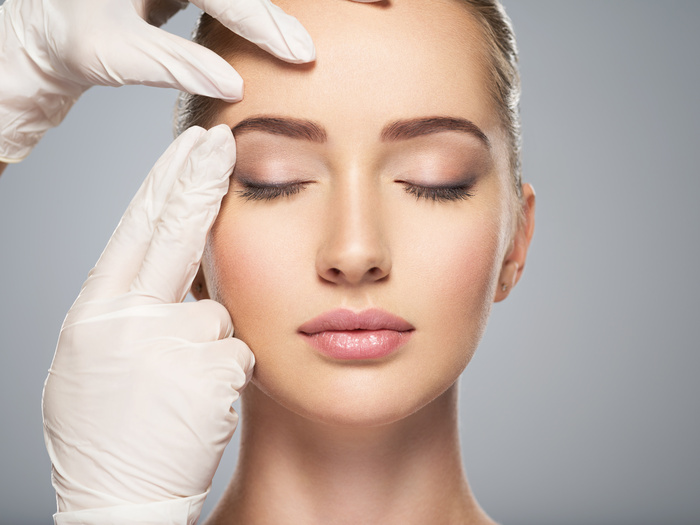
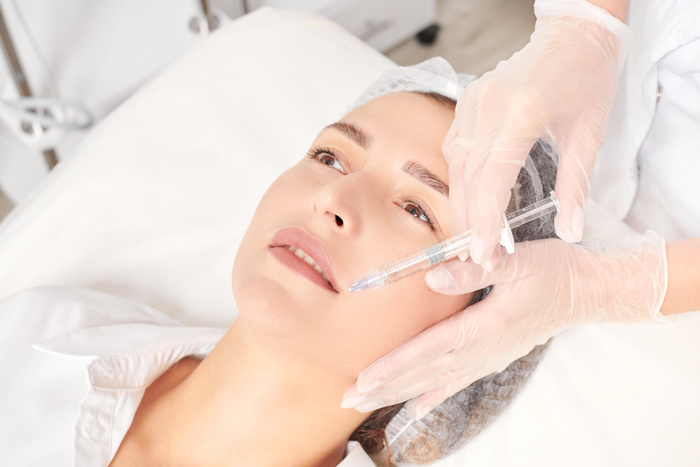
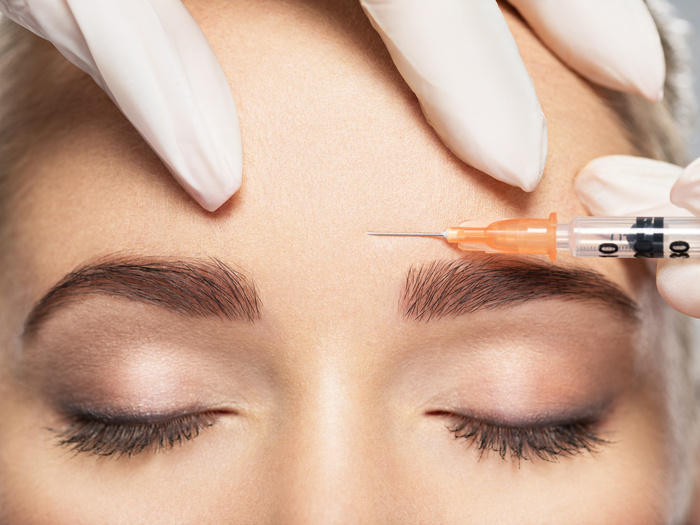
At this stage of life, fillers are almost always used in tandem with the neuromodulators, which act by weakening the contraction of muscles in the face. When injected around the eyes, crow’s feet are softened and smoothed out. When injected into the forehead, the accordion wrinkles soften and the vertical frown lines between the brows are addressed, eliminating the “angry” look many women complain about.
Hyaluronic acid gel fillers like Juvederm and Restylane are used in tandem with neuromodulators for thinning lips with lots of perioral lines (these are the fine vertical lines where your lipstick migrates). Together, they restore volume while stopping the movement that is causing the wrinkling. Unfortunately, menopause often greatly accelerates the thinning of the lips in some women, and Juvederm or Restylane is one of the best ways to replace lost volume and restore a more youthful contour to the mouth.
Restylane is also utilized to fill in the hollows under the eyes and bring back that youthful, reflective quality. For drooping upper eyelids/brows with eye hollows, fillers can help lift the tail of the eyebrow– all of which rejuvenate the entire eye area, giving it a refreshed appearance and eliminating the shadows and hollows that often make women in their Fifties and Sixties look exhausted and worn out, when that is not at all how they feel.
As always, I close with the advice that — in addition to a balanced diet, regular exercise, sufficient hydration, and maintaining a steady weight – it is imperative that you apply sunscreen daily. It is the most commonly available and inexpensive anti-aging treatment you can invest in. Sun exposure is the main cause of premature aging, and now that you are in your Fifties and Sixties and investing in treatments to slow and reverse the signs of aging, you will undo whatever progress you have made – and paid for – by not applying sunscreen daily. Use an SPF of at least 30, and if you cannot tolerate a chemical sunscreen, use a physical sunblock like titanium or zinc-oxide.
Mineral cosmetics – which now appear in every mass cosmetics line from the drugstore to the department store, from the health food stores to Sephora, and to dermatologists and plastic surgeon’s offices like mine (we carry the Jane Iredale brand) — contain physical sunscreen because the primary ingredient in most of them is titanium dioxide. If you hate the feeling of sunscreen on your face in addition to makeup in the Florida heat, find a tinted moisturizer with a good SPF. Just don’t rely on the SPF 8 or SPF 10 in an expensive traditional liquid or cream foundation to be enough sun protection.
Starting in next month in May, we begin a new three-part series: Sun Worship | Bronze Now, Pay Later. As always, I invite you to leave your comments, suggestions, or ideas for topics you’d like me to address in future blog posts on our Facebook page. Until then, be healthy and happy, and always feel beautiful – because you are.
John G. Westine, M.D.